15 Halloween Classroom Games & Activities for Kids
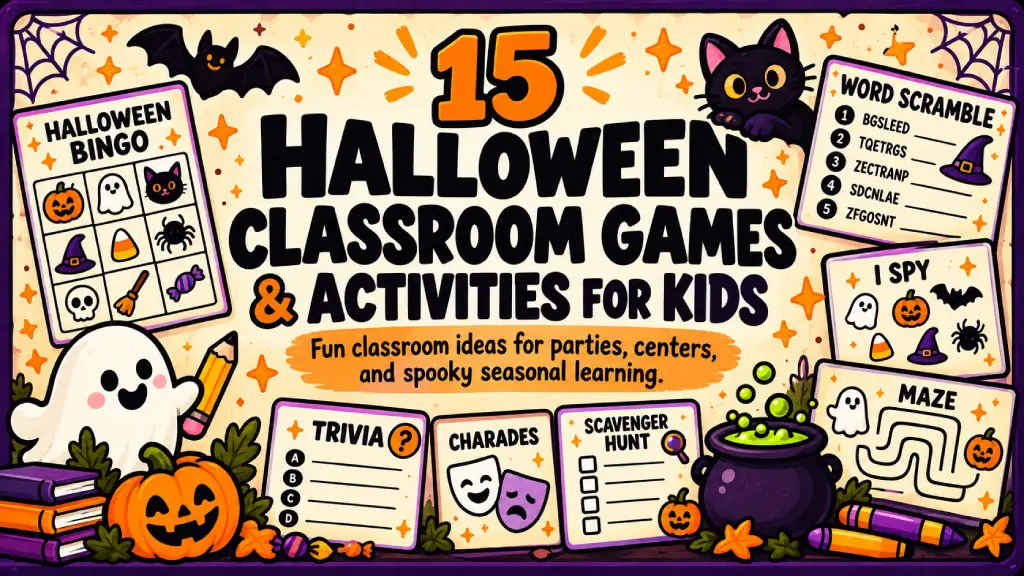
Halloween is a great excuse to bring a little extra fun into the classroom. But a good classroom Halloween activity needs to be more than entertaining—it should also be easy to explain, simple to prepare and flexible enough to work with a room full of kids. Whether you’re planning a full classroom Halloween party, looking for a quick activity before dismissal or just want to add some spooky-season fun to the school day, these Halloween games give you plenty of options. We’ve included ideas for different ages, group sizes and activity lengths so you can choose what works best for your classroom. Activity Best Ages Group Size Approx. Time Halloween Bingo 5–12 4–30+ 15–25 min Halloween Trivia 8–14 4–30+ 15–30 min Halloween Riddles 7–13 2–30+ 10–20 min Halloween Word Scramble 7–12 Individual or teams 10–20 min Halloween Scavenger Hunt 6–12 2–30+ 15–30 min Halloween Word Search 6–12 Individual 10–20 min Halloween Would You Rather 6–14 4–30+ 10–20 min Halloween Charades 7–14 6–30+ 20–30 min Halloween I Spy 5–10 Individual or teams 10–20 min 60-Second Halloween Challenges 7–14 4–30+ 20–40 min Halloween Candy Trail Board Game 6–12 2–6 per group 20–30 min Halloween Shadow Match 5–9 Individual or pairs 10–15 min Halloween Mystery Touch Box 6–12 4–30+ 15–25 min Halloween Personality Quiz 7–14 Individual or group 10–20 min Halloween Maze Challenge 6–12 Individual 10–20 min 1. Halloween Bingo Best for ages: 5–12Group size: Small groups to a full classroomTime: 15–25 minutes Halloween Bingo is one of the easiest classroom Halloween games because most students already understand how bingo works. Instead of numbers, the cards can feature Halloween pictures or words such as pumpkins, ghosts, witches, candy, bats, black cats and haunted houses. Give each student a card and something they can use as markers, then call one Halloween item at a time. The first student to complete the required pattern wins. For younger students, picture-based bingo makes the game easy to follow without requiring a lot of reading. Older students can play several quicker rounds with different winning patterns, such as five in a row, four corners, an X or a full card. Classroom tip: Small reusable counters work well as markers, but pieces of paper, crayons or even candy corn can make the activity more festive. Check out the free printable Halloween Bingo game. 2. Halloween Trivia Best for ages: 8–14Group size: 4–30+Time: 15–30 minutes Halloween Trivia is especially good for older elementary and middle-school students because it combines a party game with a little Halloween knowledge. Divide the class into small teams and ask questions about Halloween traditions, pumpkins, spooky animals, costumes, folklore and other age-appropriate topics. Give each team a short amount of time to discuss its answer before revealing the correct response. A mixture of easy, medium and more challenging questions works best because it gives everyone a chance to contribute. You can also turn trivia into several short rounds. Start with easier Halloween questions and gradually increase the difficulty as the game goes on. Classroom tip: Have each team write its answer down instead of shouting it out. That keeps every group involved and prevents one student from answering everything. Get access to free Halloween Trivia 3. Halloween Riddle Challenge Best for ages: 7–13Group size: Individual, teams or full classroomTime: 10–20 minutes Halloween riddles are a simple way to get students thinking while keeping the activity fun and seasonal. Choose riddles with answers such as bats, pumpkins, ghosts, spiders, skeletons and witches. Read one riddle at a time and let students write down their guesses or discuss them with a team. For example: I grow on a vine and wear an orange coat. Carve me a grin and place a light inside. What am I? You can make the activity competitive by awarding one point for every correct answer, or simply use the riddles as a whole-class warm-up. Classroom tip: Give younger students a few possible answers to choose from. Older students can solve the riddles without clues. Check out some free Halloween Riddles 4. Halloween Word Scramble Best for ages: 7–12Group size: Individual or teamsTime: 10–20 minutes A Halloween Word Scramble makes an easy independent activity for students who enjoy word puzzles. Give students scrambled versions of Halloween words and challenge them to figure out each answer. You can use easier words for younger students and gradually work up to words such as vampire, skeleton, cauldron, werewolf, graveyard and tombstone. For a classroom competition, set a timer and see who can solve the most words before time expires. Another option is to let students work in pairs. This makes more difficult rounds approachable without removing the challenge. Classroom tip: Include several difficulty levels on the printable so students can move on to a harder round if they finish early. 5. Halloween Scavenger Hunt Best for ages: 6–12Group size: Small teams or full classroomTime: 15–30 minutes A Halloween Scavenger Hunt can be played inside the classroom, around the school or outdoors in an approved area. Instead of hiding objects, students can search for Halloween-themed sights such as a pumpkin, spiderweb decoration, skeleton, ghost, black cat, decorated door or orange lights. If you want to keep the activity inside, hide printed Halloween pictures around the classroom and give students a checklist of what to find. For older students, you can add riddles or clues that lead from one object to the next. Classroom tip: Clearly define the search area before starting. Students should remain in approved spaces and should never enter restricted areas or private property during an outdoor version. 6. Halloween Word Search Best for ages: 6–12Group size: IndividualTime: 10–20 minutes A Halloween Word Search is a useful option when you want something festive but quieter. Students search a letter grid for Halloween-related words such as pumpkin, ghost, witch, scarecrow, cemetery, phantom, broomstick, gargoyle or nightmare. Younger students can work with shorter words placed horizontally and vertically. Older students can tackle larger puzzles that also include diagonal and backwards words. Because students can work independently,